Skip to content
FluentListener_header_banner
Fluent Listener. On the web since 2001
  • Login
  • Become a member: unlimited listening, four languages
  • 8-second Spanish listening exercises – free
  • 8-second French listening exercises – free
  • 8-second Italian listening exercises – free
  • French Slooow-Echoing exercises – free
  • Email newsletter – Free samples in your inbox every week
  • French interviews (members only)
  • Italien interviews (members only)
  • Spanish interviews (members only)
  • Accurate French pronunciation exercises (members only)
  • French numbers (members only)
  • Privacy Policy

https://fluentlistener.com/wp-content/uploads/mkt8secLaurence3a.mp3


Laurence is talking about her time in New York. Join and listen to the whole interview here: Laurence talks about her time in New York and her life back home in Normandy.

Videos to learn more about this site:

Click play to find the free stuff
PlayPlay
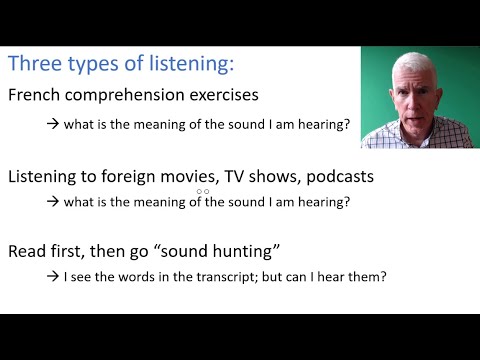
The three types of listening
PlayPlay
Learn to hear a “vowel bend.”
PlayPlay
Hearing, “c’est pour ça que j’ai dit” in spoken French
PlayPlay
How to say “soeur” in French
PlayPlay
Improve your accent with the ‘Speak Better’ exercises
PlayPlay
Using the loop tool on your phone
PlayPlay
Do you hear the “e”
PlayPlay
previous arrow
next arrow

Comments

4 responses to “8-second French listening exercise Laurence3a”

  1. December 16, 2023
    Ray Artz

    Regarding “était quelque chose de”, the final “e” in “quelque” is not pronounced, so the pronunciation is rather like “était quelk chose de”. Further, the “k” sound in the imaginary word “quelk” is formed in the back of the mouth, but is not actually enunciated. However, there is a tiny break in the air flow so “quelk chose” is different than “quelle chose de”. Maybe this helps.

    Reply
  2. December 16, 2023
    Anonymous

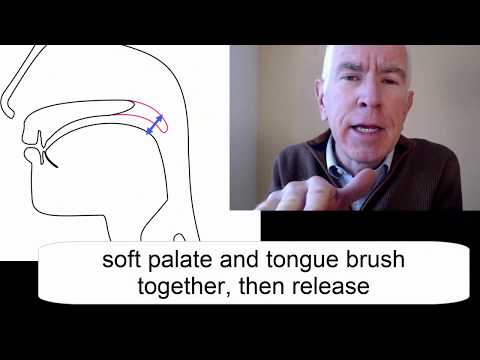
    Regarding hearing the “d” in “de”: the “e” in “de” is not sounded, so one forms the “d” by touching the tongue to the top of the mouth, but there is no actual enunciation of the “d” sound; one proceeds directly to the word “contact”. “simples de contact” has only 4 syllables, rather like saying “simpled-contact” or “simplet-contact”. For contrast and to hear the effect of the “d”, one could try saying “simple-contact”. This is also a four-syllable group, but the tongue does not touch the top of the mouth between the two words.

    Reply
  3. January 20, 2022
    Stephanie Allen

    In this passage, the phrase “était quelque chose de” is difficult to decipher.

    Reply
  4. January 20, 2022
    Stephanie Allen

    In this passage, the section “était quelque chose de” is difficult for me to decipher.

    Reply

Leave a Reply Cancel reply

Your email address will not be published. Required fields are marked *

  • Login
  • Become a member: unlimited listening, four languages
  • 8-second Spanish listening exercises – free
  • 8-second French listening exercises – free
  • 8-second Italian listening exercises – free
  • French Slooow-Echoing exercises – free
  • Email newsletter – Free samples in your inbox every week
  • French interviews (members only)
  • Italien interviews (members only)
  • Spanish interviews (members only)
  • Accurate French pronunciation exercises (members only)
  • French numbers (members only)
  • Privacy Policy
FluentListener_header_banner

FluentListener.com

For information : david.tolman@fluentlistener.com

Designed with WordPress