Skip to content
FluentListener_header_banner
Fluent Listener. On the web since 2001
  • Login
  • Become a member: unlimited listening, four languages
  • 8-second Spanish listening exercises – free
  • 8-second French listening exercises – free
  • 8-second Italian listening exercises – free
  • French Slooow-Echoing exercises – free
  • Email newsletter – Free samples in your inbox every week
  • French interviews (members only)
  • Italien interviews (members only)
  • Spanish interviews (members only)
  • Accurate French pronunciation exercises (members only)
  • French numbers (members only)
  • Privacy Policy

https://fluentlistener.com/wp-content/uploads/8sec2cv_07-2.mp3

If the video below doesn’t play, this link will play it on youtube: https://youtu.be/_FPhnaJsMBc


Longer French listening exercises

Videos to learn more about this site:

Click play to find the free stuff
PlayPlay
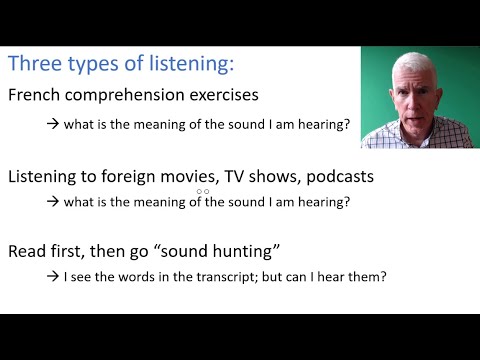
The three types of listening
PlayPlay
Learn to hear a “vowel bend.”
PlayPlay
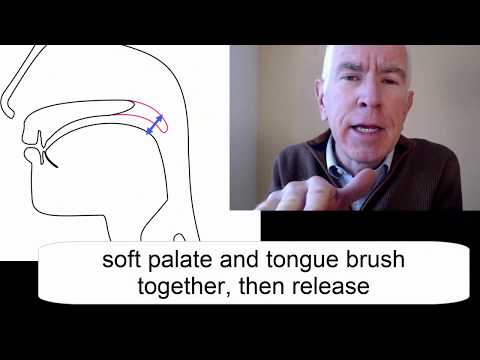
Hearing, “c’est pour ça que j’ai dit” in spoken French
PlayPlay
How to say “soeur” in French
PlayPlay
Improve your accent with the ‘Speak Better’ exercises
PlayPlay
Using the loop tool on your phone
PlayPlay
Do you hear the “e”
PlayPlay
previous arrow
next arrow

Comments

6 responses to “8-second French listening exercise: 2CV track7-2”

  1. March 27, 2023
    Ray Artz

    As usual, David has produced a fine piece of instruction. However, regarding “c’est pour ça que j’ai dit”, there are two things going on here that affect what one hears, but are not mentioned in the video. First, the “mute-e” in “que” is not pronounced, so there is no syllable there, and only the consonant “qu” is left. This would normally be pronounced as a /k/ sound, but then there is the second effect, called “assimilation”: when two consonant sounds are pronounced one after the other (in this case, the “qu” and the following “j”), the first consonant will normally borrow (that is, assimilate) the voicing (or voicelessness) of the latter. In this case, since the “j” is voiced, the “k” will also be voiced, resulting in a /g/ sound instead of the /k/ sound. In effect, the phrase comes out much like “c’est pour çag j’ai dit”. For a case in which the first consonant loses its voicing, consider the word “medecin”. Here the second “e” is mute and rarely if ever pronounced (making this is a 2-syllable word), and the “d” loses it voicing and gets pronounced as a /t/ sound because the “c” is a voiceless /s/ sound.

    Reply
    1. March 27, 2023
      DavidTolman

      Hello Ray, great contribution. Thank you. I hope will help others.

      Reply
  2. January 27, 2022
    Stephanie Allen

    “Deux chevaux” sounds like deux “show” to my ears, and “c’est pour que ça que j’ai dit” sounds like one long string of sound. I guess I’ll be working on that one for a while. : )

    Reply
    1. June 17, 2022
      Carol

      Me too 😱

      Reply
      1. February 10, 2023
        DavidTolman

        Thank you Carol, for letting me know. Does the video above help?
        Best regards,
        David

        Reply
    2. February 10, 2023
      DavidTolman

      Hello Stéphanie,
      Thank you for letting me know. I posted a video above to help.
      Does that help you hear it?
      Best regards,
      David

      Reply

Leave a Reply Cancel reply

Your email address will not be published. Required fields are marked *

  • Login
  • Become a member: unlimited listening, four languages
  • 8-second Spanish listening exercises – free
  • 8-second French listening exercises – free
  • 8-second Italian listening exercises – free
  • French Slooow-Echoing exercises – free
  • Email newsletter – Free samples in your inbox every week
  • French interviews (members only)
  • Italien interviews (members only)
  • Spanish interviews (members only)
  • Accurate French pronunciation exercises (members only)
  • French numbers (members only)
  • Privacy Policy
FluentListener_header_banner

FluentListener.com

For information : david.tolman@fluentlistener.com

Designed with WordPress